A very simple piece that I was requested to record. I wasn’t going to transcribe this to paper, but I couldn’t remember where to come in so I had to write it out and count rests. By the time I did that I figured I’d done most of it, so I kept going…
Inner City Blues (Make Me Wanna Holler), as recorded by Gil Scott Heron on his 1981 album “Reflections”.
This is his cover of Marvin Gaye’s 1971 protest anthem, wherein he described the widening gulf of inequality, racial instability, and social hardship endured throughout America’s urban spaces.
That was nearly 50 years ago. Time to belt it out again.
Faith No More covered this Lionel Richie / Commodores song in the 90s and did a very respectable job of it. “Less is more” rings true here, with the arrangement very close to the original. I recall it received lots of radio airplay, back in the day.
The single was released in Europe as I’m Easy and everywhere else simply as Easy. Though it’s also commonly referred by the chorus line Easy Like Sunday Morning.
Barry White recorded the track It’s Only Love Doing Its Thing in 1978. A revamped arrangement was released by Simply Red in the late 1980s, which I recall received a heck of a lot of airplay on commercial radio at the time.
Here’s the recurring trumpet line from the Simply Red arrangement, which I was recently asked to record.
A song that has been covered so many times that I wasn’t sure which was the original version. But now I know that Raindrops Keep Fallin’ On My Head was composed by Hal David and Burt Bacharach, and recorded by vocalist B.J. Thomas for the 1969 film Butch Cassidy and the Sundance Kid. The internet tells me that the song won an Oscar for Best Original Song, while David and Bacharach also won Best Original Score for the movie.
Importantly for trumpet players, the original solo was performed by the amazing Chuck Findley. Simple, bouncy, optimistic, and very fitting. And if you needed to see what the dots look like, now you can…
Welcome to the 1975 “urban disco-funk” of the Fatback Band. So, are you ready to do “the bus stop”? Whatever that means…
This chart aligns with the 3:30 single release in the key of D minor (concert). Though I’ve included some horn lines in the coda that I quite like from the 12″ single.
I played the tenor sax part on bass trumpet for this recording, then I dropped part of it down into the tuba range electronically.
It seems like Sunny has been covered a million times. It’s such a beautiful song! I’ve played at least a few different arrangements in my time, including an incredible one that I transcribed by Jamiroquai. But this time I transcribed and recorded the original 1966 arrangement as first recorded by composer Bobby Hebb.
Parts are here for trumpet and tenor sax. It was very difficult to hear all of the faint sax lines on the original recording, so there are a few educated guesses in places. But I promise that it works 🙂
Such an iconic song, bringing luscious strings and horns to The Doors in 1968. So I was amazed that I couldn’t find and purchase charts for this that were even close to matching the original recording. Determined to push ahead I was able to decipher all of the horn parts, while my masterfully talented friend Ynping transcribed the strings.
So here you find charts for strings (3 violins, 3 cellos) and the horn section (2 trumpets, trombone, alto sax, tenor sax, and baritone sax). Very closely aligned to the original recording.
This song was a crowd favorite when I held the trumpet chair in the rock band Summerhouse during the late 1980s/early 1990s. But the entire brass section of the band consisted of me, and my transcription at the time was limited. And never mind the synth strings… But now, with the benefit of experience, new software tools at my fingertips, remastered source recordings, and such a talented violinist as a good friend, this transcription and its performance were finally possible.
This recording started within the Bandhub platform while it was online, but after a long pause, it was finished offline through the addition of final tracks, a DAW mix, and a custom video. My sincere thanks to all of my friends for their contributions to this wonderful project. I couldn’t be happier with it!
Credits:
Andrew Mayes: trombone
Clay Whisenant: bass
Emily Johnson: cellos
James Wilkas: alto, tenor, and baritone saxes, keys, DAW mix, video edit
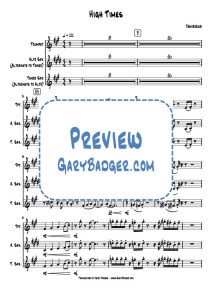
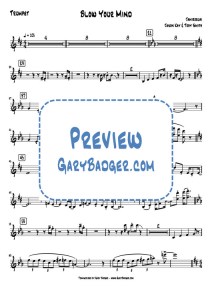
The Jamiroquai horn section must surely have had a blast, back in the day. This stuff is a lot of fun to play. And transcribing it keeps me on my toes, as seemingly repeated horn lines contain subtle variations all the way through and nothing can be taken for granted.
Once more, along with the trumpet part I’ve provided for alternate alto or tenor sax parts, to give you more flexibility. I’m pretty sure Jamiroquai used one trumpet and one tenor sax in the original studio recording.
I’ve recorded the trumpet part in an online BandLab collaboration. Once all of the other contributions are assembled and the recording is properly mixed, I’ll update this post to include it.
I love these guys! Always fun to transcribe and play Jamiroquai horn parts, and the trumpet/flugelhorn player gets a nice workout this time around. I’ve recorded my parts and am waiting for my musician buddies to do theirs. When complete, I’ll update this post to include the recording (as usual).
This time I’ve written alternating tenor/alto sax charts to give you a little more flexibility.




 Gary Badger's Trumpet Transcriptions